Thinking about building a custom home in La Cholla Airpark? It is an exciting opportunity, but it also comes with more moving parts than a typical homesite in Oro Valley. Between parcel-specific zoning, Airport Environs Zone rules, and private airpark considerations, early planning can save you time, cost, and design revisions later. If you want a clearer path from lot selection to permit-ready plans, this guide will walk you through the key issues to address first. Let’s dive in.
Why La Cholla Airpark planning is different
La Cholla Airpark is a private residential airpark in Oro Valley, about 20 miles northwest of Tucson. The community spans roughly 1,000 acres, includes lots of at least 7 acres, and is centered around a 4,500-foot by 44-foot paved, lighted runway. The setting is known for blending aviation, equestrian use, and rural desert character.
That lifestyle appeal is exactly why planning matters so much. A custom build here is not just about designing a luxury home that fits your vision. You also need to coordinate Town of Oro Valley requirements, Airport Environs Zone standards, and any private community restrictions that may affect how the property can be used and improved.
Start with the parcel, not the floor plan
Before you spend serious time on architecture, confirm the parcel-specific zoning. Oro Valley notes that zoning determines basics like permitted uses, setbacks, and building height, and the Town provides a parcel map tool for verifying zoning district details.
For at least one La Cholla Airpark parcel, the Town identified zoning as R1-300 and noted that the property was also subject to the Airport Environs Zone, or AEZ. That matters because AEZ rules apply to new development, subdivisions, development plans, and new construction on individual lots.
In practical terms, two lots in the same airpark may not have the same planning path. The smartest early move is to verify the zoning, identify whether more than one zoning condition affects the parcel, and understand any recorded notices or overlay requirements before your concept design is finalized.
Understand AEZ rules early
In La Cholla Airpark, AEZ compliance is a core part of the design process. Oro Valley’s code says the AEZ includes multiple areas, including CUZ A, B, C, D, plus a conical zone, and these standards affect how new construction is reviewed.
One major point is noise mitigation. The current code requires uses in the AEZ to include insulation, fenestration, and related building techniques that reduce interior noise to 45 dB or less. That means window selection, wall assembly, and other building-envelope decisions should be part of the design conversation from the beginning, not added later.
Height is another major factor. Oro Valley states that no structure, land use, or tree may penetrate the AEZ height surface. If your home or accessory structure will be close to the maximum allowable height, the Town’s residential permit instructions say surveyor certifications may be required during construction.
Plan the hangar and home together
If your parcel has aircraft or taxiway access, hangar planning should happen at the same time as the home design. In the Town’s interpretation for a La Cholla Airpark parcel, a lot with aircraft or taxiway access could have one accessory aircraft-storage building with a maximum height of 34 feet, 20-foot setbacks from the property line or street edge, and 10 feet between buildings.
Those parameters can shape the entire site layout. If you design the residence first and treat the hangar as an afterthought, you may end up limiting circulation, compromising apron functionality, or creating setback conflicts.
The runway is designated 1/19, and the official airpark site lists runway 19 as preferred. While that is not itself a design rule, it suggests a roughly north-south aviation pattern, so it is wise to think through hangar door orientation, apron movement, and driveway access in relation to runway and taxi flow.
Know that fuel storage is site-specific
Fuel storage is one of the biggest issues that should never be assumed. In the Town interpretation for a La Cholla Airpark parcel, aviation fuel storage and dispensing was allowed on that property only in CUZ B for the property owner. The same interpretation said CUZ C and CUZ D residential properties could not have aviation fuel storage.
The Town also noted that fire-code rules may separately restrict a mobile tanker. If on-site fueling is part of your vision for the property, confirm what applies to your exact parcel before you commit to the site plan or construction budget.
Design the site plan as one coordinated package
Oro Valley’s development requirements make it clear that the site plan is more than a sketch of the house footprint. The Town says site plans must show existing zoning, lot lines, lot numbers, easements, adjacent conditions, and any zoning boundary if more than one zone applies.
If an easement conflicts with the proposed building location, the Town says it may need to be vacated before permit approval. That is one reason a survey and feasibility review are often high-value steps early in the process.
The Town’s development package also calls for details such as maximum building height, setbacks, open space, buffer yards, parking, common-area ownership and maintenance, plus separate review paths for signage and lighting. For a custom build, this means your architectural, civil, and landscape concepts should be coordinated from the start rather than developed in isolation.
Address drainage, grading, and access up front
In Oro Valley, drainage planning is a permit issue, not a late-stage technical note. The Town’s template requires drainage to be collected and released in the same manner as before development, and drainage ways may need to be dedicated and maintained by property owners or an HOA.
A custom home most often needs a Type 1 grading permit, and some projects may also need a floodplain use permit. If your build site includes changes in grade, driveway cuts, or drainage-sensitive areas, those items should be reviewed before the design is too far along.
Access standards matter too. Oro Valley’s development package calls for all-weather access, public-improvement coordination, and fire-access standards in the plan set, including a road surface capable of supporting 82,000 pounds and fire apparatus access with approved water supply.
Coordinate utilities sooner than you think
Water-service planning should begin early. Oro Valley’s development package says the Town’s water utility will be the provider unless another public supplier applies, and a line-extension agreement must be in place before public water infrastructure work begins.
The same package notes that wells within the project boundary must be abandoned according to Arizona Department of Water Resources regulations. Depending on the parcel, utility planning may also include confirming whether Pima County sewer connection fees apply.
These are not small details. Utility timing can affect both budget and permit sequencing, especially on larger custom estates where civil improvements and building plans move in parallel.
Respect the landscape and desert conditions
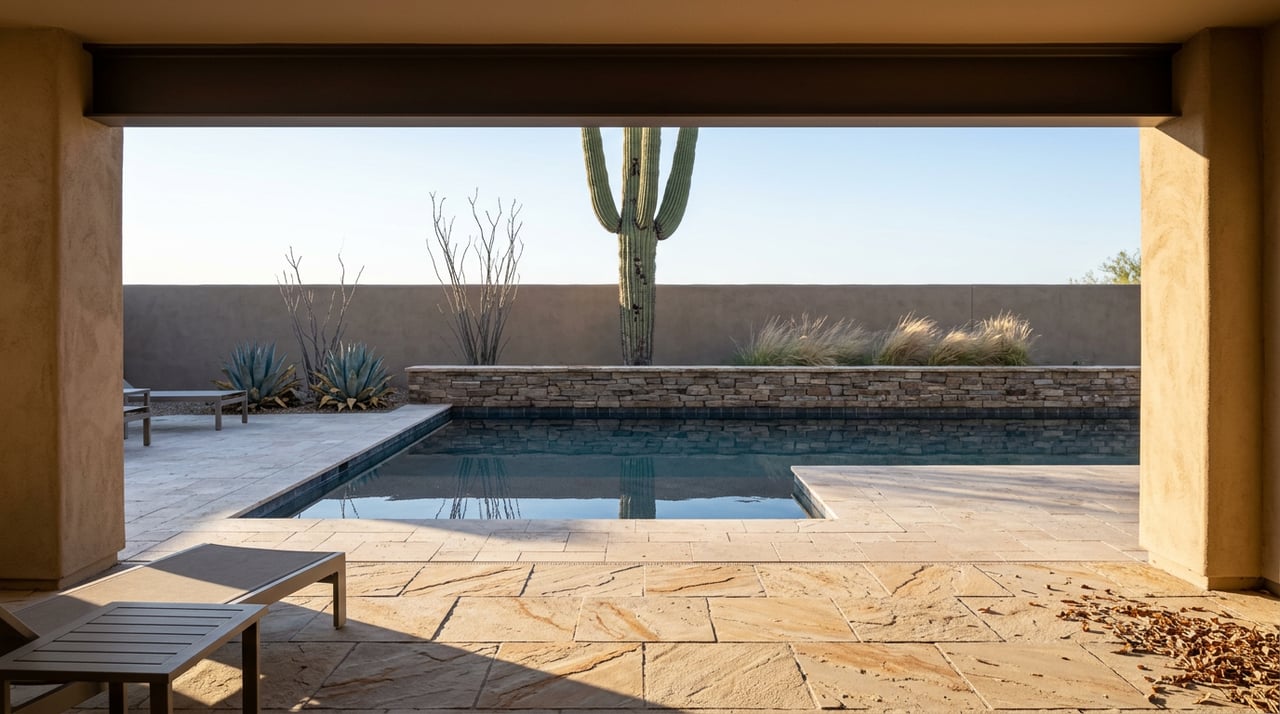
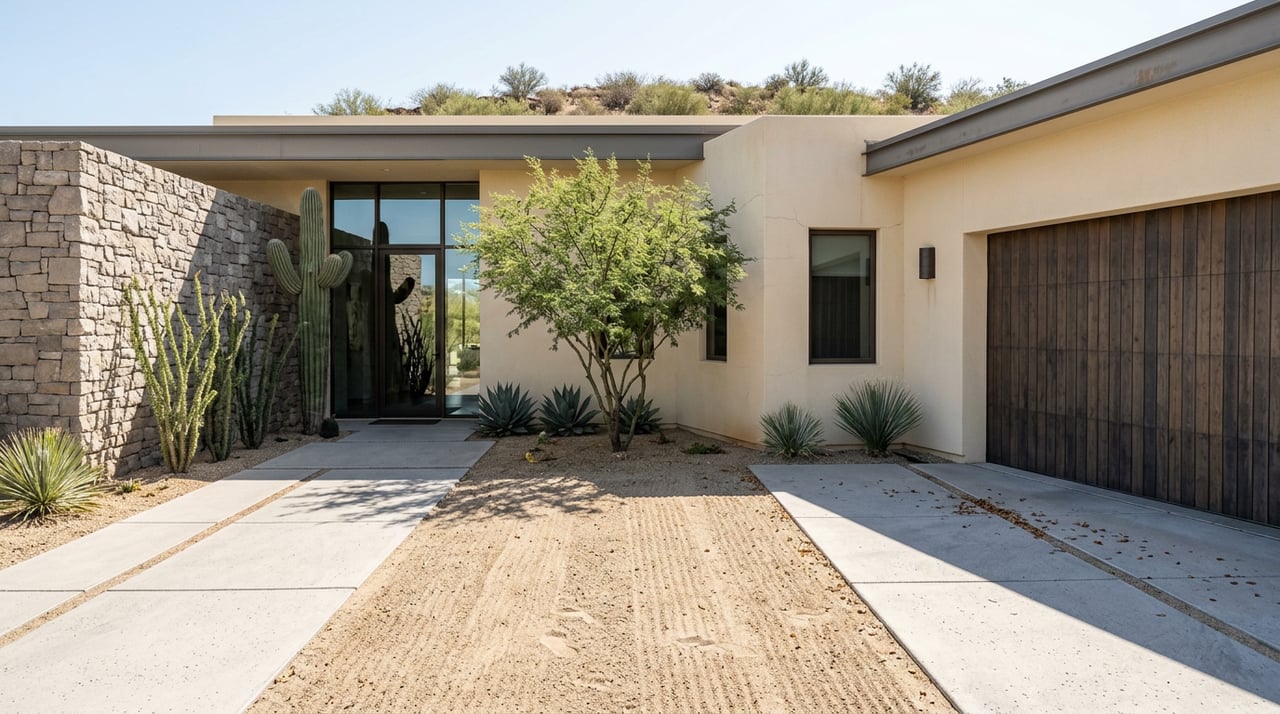
Landscaping in La Cholla Airpark is part of the approval process, not just a finishing touch. Oro Valley says the custom-home landscape code generally applies to the front yard, disturbed areas must be revegetated, and significant saguaros require a 10-foot clear zone.
If your project disturbs 1,000 square feet or more, the Town requires a plant salvage and landscape plan, with plants tagged and grading limits marked before review. On larger homesites, this can influence where you place driveways, pads, retaining elements, and outdoor living areas.
For many custom buyers, preserving the desert setting is part of the appeal. Early landscape planning can help protect that character while also reducing redesign later in the entitlement and permit process.
Consider equestrian uses carefully
La Cholla Airpark is known for a lifestyle that includes both aircraft and horses, but equestrian improvements still need careful review. The community presents horses as part of the setting, while Oro Valley states that private CC&Rs are not voided by zoning code.
The Town also prohibits home occupations that keep, care for, or sell animals from the property. If you are considering a barn, corral, riding arena, boarding concept, or training use, it is important to verify both Town code and private restrictions before design work begins.
Build the right project team
Oro Valley’s permit requirements point to the level of coordination these homes demand. The Town requires sealed Arizona documents, engineering calculations, soils reports, truss calculations, and other supporting materials as part of residential permit review.
For residential projects, plan review is 20 business days for the first and second submittals. Permits are issued electronically, and printed copies of the permit, approved plans, and supporting documents must remain on site for inspectors.
The Town also requires a scheduled pre-construction meeting or inspection for custom residential projects. Given the level of site, code, drainage, utility, and height coordination involved, many buyers benefit from working with an Arizona-licensed architect or designer, a civil engineer, a surveyor, and a builder who understands airport-overlay communities.
Watch the code timing
Code timing can affect both design and review. Oro Valley adopted the 2024 International Building Codes and the 2023 National Electrical Code effective January 1, 2026. Plans submitted on or after that date are reviewed under the 2024 code set unless grandfathering applies.
If your design timeline stretches across that date, it is worth confirming how submission timing may affect plan preparation and review standards. That can help you avoid revisions that come from a code-set change midstream.
A practical planning checklist
Before you finalize a custom home concept in La Cholla Airpark, make sure you have answers to these questions:
- What is the parcel’s current zoning?
- Which AEZ area applies to the lot?
- Are there height, setback, or hangar-location constraints?
- Does the site contain easements that affect the building area?
- Will the concept require grading, floodplain, drainage, or plant salvage review?
- How will water service be provided, and are sewer fees applicable?
- Are fuel storage or dispensing plans permitted on this parcel?
- Do private rules affect hangars, equestrian improvements, lighting, or other site features?
- Is your architect, engineer, surveyor, and builder team aligned before design development begins?
On a property this specialized, the highest-value early work is often a zoning check, survey, concept site plan, and civil and architectural feasibility review. That groundwork can help protect both your vision and your budget.
Whether you are evaluating land, comparing build options, or trying to understand how a future resale buyer may view a custom airpark estate, local guidance matters. For discreet, detail-oriented insight on La Cholla Airpark and the broader Oro Valley luxury market, connect with The Bonn Team.
FAQs
What makes a custom home build in La Cholla Airpark more complex?
- A La Cholla Airpark build usually involves three layers of review: parcel-specific zoning, Airport Environs Zone compliance, and private community rules.
What should you verify first before designing in La Cholla Airpark?
- You should confirm the parcel’s zoning, AEZ status, setbacks, height limits, easements, and any private restrictions before finalizing the floor plan.
What are the hangar rules for some La Cholla Airpark lots?
- In the Town interpretation cited in the research, a lot with aircraft or taxiway access could have one accessory aircraft-storage building with a 34-foot maximum height, 20-foot setbacks, and 10 feet between buildings.
Can you have aviation fuel storage at a La Cholla Airpark home?
- It depends on the parcel. The Town interpretation cited in the research allowed aviation fuel storage and dispensing only on the subject property in CUZ B for the owner, while CUZ C and CUZ D residential properties could not have aviation fuel storage.
Do custom homes in La Cholla Airpark need special noise design?
- Yes. Oro Valley’s AEZ rules require insulation, fenestration, and related building techniques that reduce interior noise to 45 dB or less.
What permits or reviews are common for a La Cholla Airpark custom build?
- Depending on the site, your project may involve residential permit review, grading review, possible floodplain review, drainage coordination, utility planning, and a required pre-construction meeting for custom residential work.
When do landscape rules apply to a La Cholla Airpark custom home?
- Landscape rules apply during planning and permitting, especially if the project disturbs 1,000 square feet or more, because Oro Valley then requires a plant salvage and landscape plan.
What code cycle applies to new custom home plans in Oro Valley?
- Plans submitted on or after January 1, 2026 are reviewed under Oro Valley’s adopted 2024 International Building Codes and 2023 National Electrical Code unless grandfathering applies.