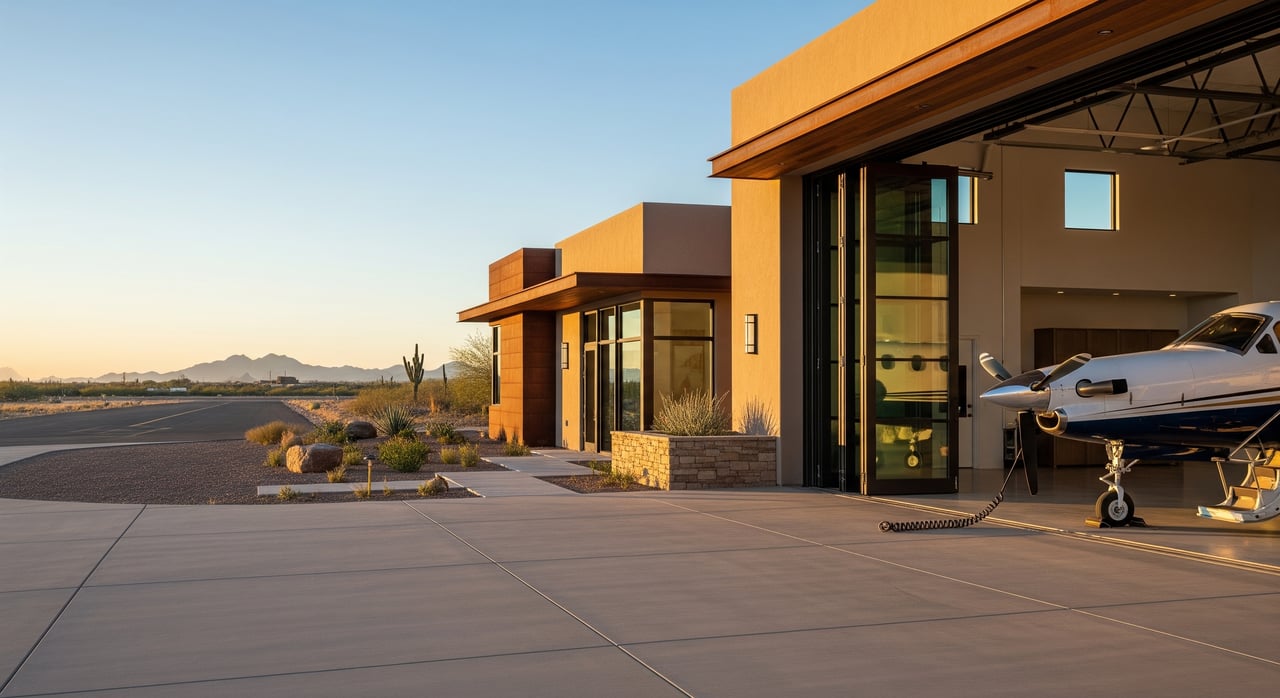
Picture this: you taxi from your own hangar to the runway, lift into Oro Valley’s clear desert sky, and you are wheels-up within minutes. Buying in a private airpark like La Cholla can deliver that freedom, but it also adds layers of due diligence you do not see in a typical subdivision. If you are an aviator considering La Cholla Airpark, you need clarity on runway rights, CC&Rs, hangar compliance, fueling rules, wells and septic, and how the HOA operates.
This guide breaks down the essentials so you can buy with confidence, protect your investment, and enjoy seamless flying at home. Let’s dive in.
What makes La Cholla Airpark different
Private-runway community basics
A residential airpark is a neighborhood built around a runway and taxiway network. Unlike public airports, airpark operations are guided by recorded easements, CC&Rs, and HOA or airport association rules. The runway may be owned by the association or a separate entity, which influences who sets policies, collects dues, and maintains insurance.
In La Cholla, your lifestyle and your flight operations intersect. That is why your purchase should confirm the exact legal basis for runway and taxiway access and how costs and rules are enforced.
Where to verify official records
Start with recorded documents and official agencies:
- Search plats, CC&Rs, and easements with the Pima County Recorder.
- Cross-check parcel data and lot boundaries with the Pima County Assessor.
- Confirm airport status and data through the FAA 5010 airport data system.
- For permits and local land-use rules, review the Town of Oro Valley’s planning and building resources at the Town of Oro Valley site or Pima County departments if a property falls outside town limits.
- For wells and groundwater, consult the Arizona Department of Water Resources.
These sources help you anchor every claim in recorded fact.
Runway rights, CC&Rs, and easements
How access is granted
Runway and taxiway rights are typically conveyed by recorded easements attached to your lot, by membership in an airpark association, or both. The recorded plat often shows taxiway corridors and right-of-way widths. Verify whether easements are appurtenant to the property and perpetual, if they transfer automatically at closing, and if any board approval is required before you can operate.
Rules that affect daily flying
Expect CC&Rs and association rules to cover:
- Hours of operation and quiet times, including noise abatement paths.
- Guest pilot and transient aircraft protocols.
- Tie-down, apron, and parking requirements.
- Maintenance responsibilities and how runway projects are funded, including reserves and special assessments.
- Insurance minimums for homeowners and aircraft, along with indemnity language tied to runway use.
Request the full set of governing documents, recent budgets, reserve studies, insurance certificates, and meeting minutes from the seller or the association. These reveal how decisions are made and what costs are coming.
Easements to confirm before you buy
Carefully confirm:
- Type and scope: taxiway access, maintenance, and utility easements serving your lot.
- Assignability: that rights transfer automatically to you at closing.
- Encroachments and setbacks: any height, tree, or structure limits near approach paths.
- Closure rights: when and how the association can restrict or close runway access for maintenance or emergencies.
Clear, enforceable access is a core purchase contingency for any airpark buyer.
Hangars, fueling, and safety
Building permits and hangar standards
Most hangars and significant additions require permits. Confirm permit history and final inspection sign-offs for structural, electrical, and fire code compliance. Hangars are typically subject to the International Fire Code and the NFPA 409 standard for aircraft hangars, which guide design, fire protection, ventilation, and fuel-handling safeguards. If any work appears unpermitted, budget for corrections or negotiate seller repairs or credits.
Fuel storage and self-fueling rules
If you plan to self-fuel, do not assume it is allowed. Many CC&Rs restrict or condition on-site fuel. Aboveground and underground tanks are regulated by the Arizona Department of Environmental Quality, and may require permits, secondary containment, spill-prevention plans, and periodic inspections. Review ADEQ’s tank programs and coordinate with county environmental authorities on local fire and environmental rules. Also confirm:
- Whether fueling is permitted by the HOA and under what training and insurance standards.
- Required liability coverages for fuel handling.
- Historical environmental issues, including any prior spills or tank removals.
A clean environmental history and compliant fueling plan protect both you and your neighbors.
Pavement and obstruction checks
Assess the condition of your hangar slab, apron, and any private taxiway segments. Determine who maintains each surface, the expected remaining life, and how repairs are funded. Also check for potential obstructions along approach and departure surfaces. Height limits, lighting, and vegetation can all be regulated by CC&Rs and local codes.
Utilities, water, septic, and equestrian use
Wells and water testing
Many larger-lot properties in the area rely on private wells. Confirm the well’s registration, review the well log, and order a pump performance test and water quality analysis. The Arizona Department of Water Resources provides well registration information and groundwater-use context. For shared systems, determine if the water system is regulated as a public water system and how costs are allocated.
Septic capacity and daily living
Pima County environmental authorities regulate septic systems, including capacity and setbacks. Order a septic inspection and, if appropriate, a dye test. Request pumping and maintenance records and verify the system’s adequacy for your household and for any approved equestrian facilities. Larger households and horse operations can increase septic loading, so sizing and maintenance are key.
Equestrian approvals and maintenance
Some airpark properties accommodate horses, but this is a matter of recorded CC&Rs and local zoning. If equestrian use is important to you, verify:
- Whether stables, corrals, or runs are permitted on the lot.
- Any limits on the number of animals.
- Required setbacks and manure management plans.
- Drainage and erosion-control standards for paddocks.
Treat equestrian approvals just as seriously as your runway rights to avoid surprises.
A due diligence roadmap for aviators
Documents to collect early
Request these items as soon as you go under contract:
- Preliminary title commitment with all exceptions.
- Full recorded CC&Rs, bylaws, and runway-use agreements; recorded plats and easements.
- HOA/airport association rules, recent minutes, budgets, reserve studies, and insurance certificates.
- Seller disclosures on aircraft operations, hangar work, fuel storage, spills, and any violations.
Inspections to order
Layer general-home and aviation-specific inspections:
- Survey: ALTA or boundary survey showing all easements, improvements, and encroachments.
- Hangar/structural inspection, including doors, slab, roofing, and electrical.
- Pavement assessment for apron and taxiway segments; drainage and subgrade review.
- Environmental review: Phase I for historical fuel use; Phase II if concerns arise; tank inspections for AST/USTs.
- Well test and water quality analysis; review ADWR registration.
- Septic inspection and capacity verification.
- Obstruction survey for approach/departure surfaces.
- Pest/termite and comprehensive home inspection.
Specialists to involve
Airpark purchases benefit from experienced professionals:
- Real estate or aviation attorney for title, easements, and CC&R review.
- Aviation insurance broker for hull and liability policies that align with HOA requirements.
- Environmental consultant for fuel storage and any remediation planning.
- Hangar structural specialist and pavement/airfield engineer.
- Land surveyor experienced with depicting airpark easements.
Lender and insurance check
Some lenders underwrite airpark homes differently. Confirm early how hangars, fueling, or any income-producing uses (like renting hangar space) affect loan terms. On insurance, verify that your homeowner’s policy, hangar coverage, aircraft hull, and liability limits meet or exceed association minimums.
Smart contingencies to include
Protect your purchase with clear benchmarks:
- Enforceable runway and taxiway access recorded in title.
- Satisfactory inspections for hangar, pavement, septic, well, and environmental status.
- Written HOA confirmation of membership transfer and no pending special assessments.
- Verified transfer of all access credentials, keys, fobs, and gate codes.
How The Bonn Team navigates airpark deals
Buying into an airpark blends lifestyle goals with technical due diligence. You should not have to juggle it alone. Our approach pairs hands-on buyer advocacy with rigorous, engineering-informed coordination so your closing is smooth and your first taxi out is stress-free.
Here is how we help you move confidently:
- Front-load discovery. We request CC&Rs, plats, budgets, minutes, reserve studies, insurance certificates, and title exceptions before you are fully committed.
- Orchestrate specialists. We line up the right hangar inspector, pavement engineer, environmental consultant, surveyor, and attorney on a practical timeline.
- Verify operations. We obtain written confirmation of your runway and taxiway rights, any board approvals, and any projects that could affect near-term operations.
- Manage permit history. We reconcile seller records with local building departments to confirm permit closures and inspection sign-offs.
- Negotiate precisely. If inspections flag pavement wear, unpermitted hangar work, or tank issues, we negotiate credits, repairs, or escrow holdbacks tied to clear milestones.
- Close cleanly. We coordinate association transfers, insurance certificates, and access credentials so you can operate your aircraft from day one.
Your next step
If La Cholla Airpark is on your shortlist, get a clear, tailored plan before you tour. We will help you focus on the documents and inspections that matter, avoid costly surprises, and position your offer to win. For discreet, expert guidance, connect with The Bonn Team.
FAQs
What documents should I review before buying in La Cholla Airpark?
- Obtain the title commitment with exceptions, recorded CC&Rs and plats, runway-use agreements, HOA rules, recent minutes and budgets, reserve studies, insurance certificates, and full seller disclosures.
How do I confirm legal runway and taxiway access rights at a property?
- Verify recorded easements on the plat and in title, confirm that rights are appurtenant and transferable, and get written HOA or airport association confirmation of membership and operational rules.
Can I store aviation fuel at a home in Pima County’s La Cholla Airpark?
- Only if allowed by CC&Rs and permitted under state and local rules; check ADEQ tank requirements, fire code standards, and any HOA insurance and training conditions for self-fueling.
What inspections are unique to an airpark home purchase?
- In addition to a general home inspection, order a hangar/structural review, pavement and drainage assessment, environmental and tank evaluations, well and water testing, septic inspection, and an obstruction survey.
How do lenders and insurers view homes with hangars and runway access?
- Some lenders apply specialized underwriting, and policies must often meet HOA minimums; confirm mortgage guidelines early and ensure homeowner’s, hangar, aircraft hull, and liability coverages are aligned.