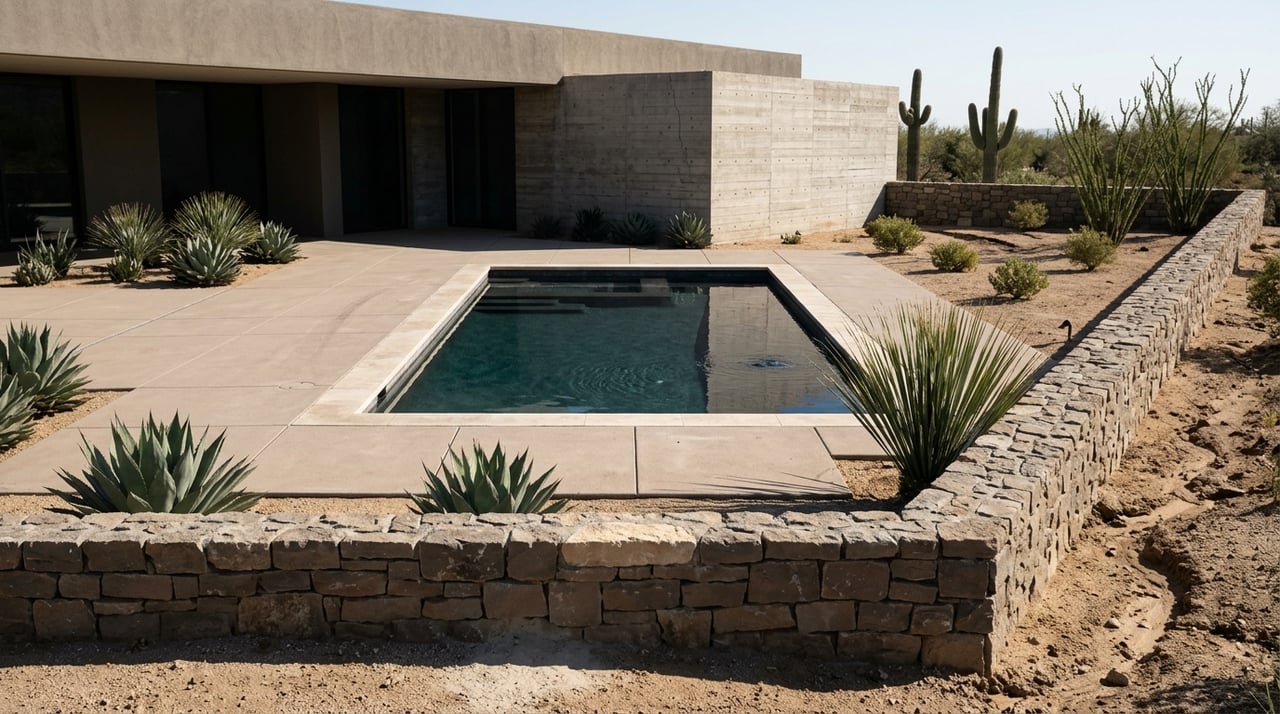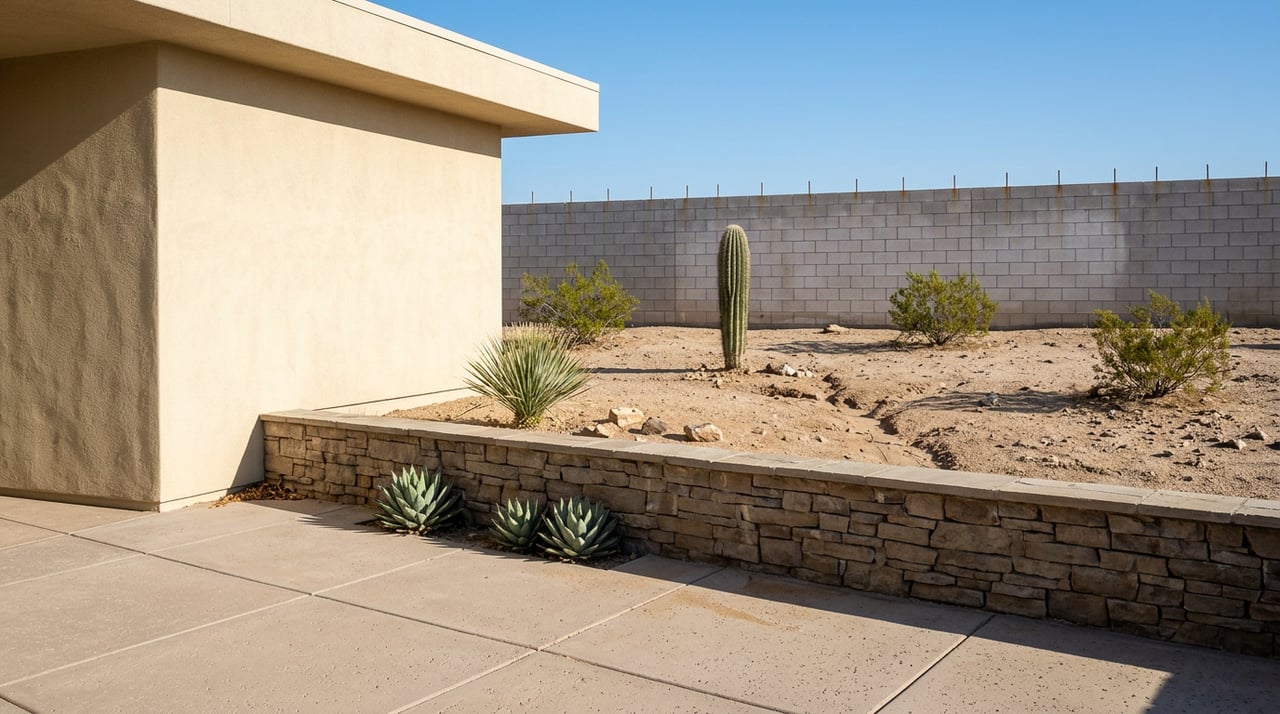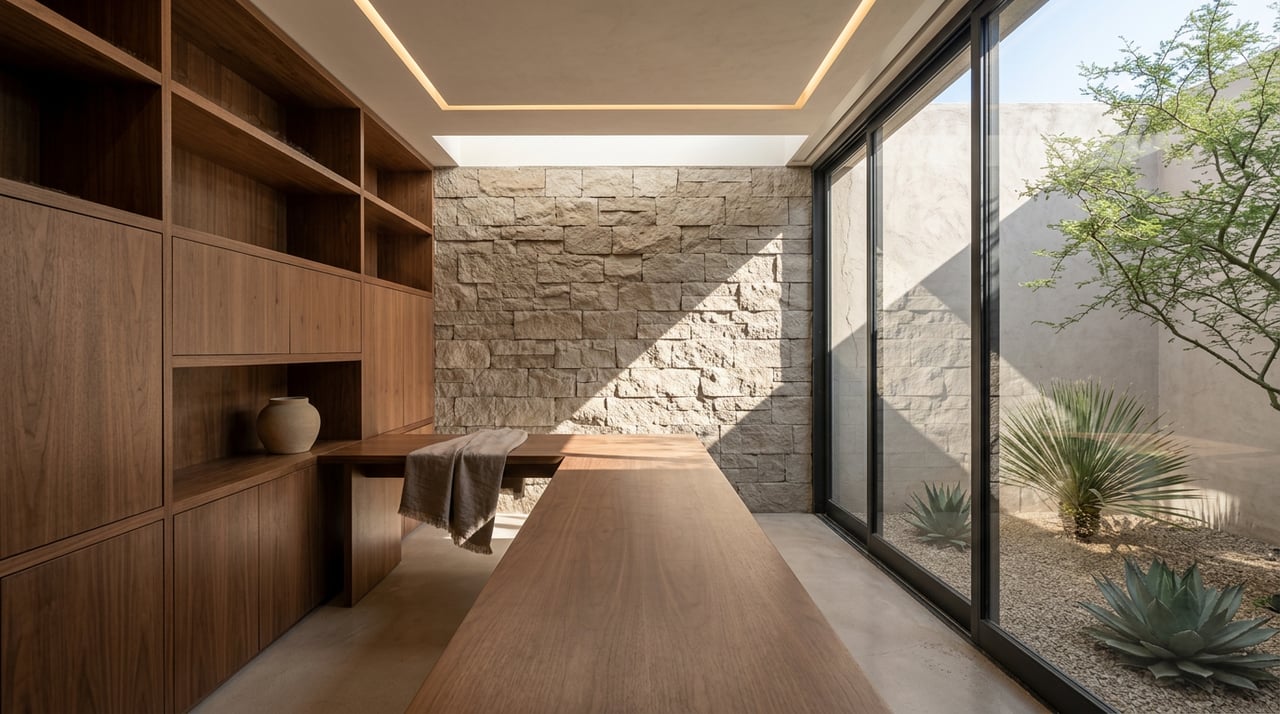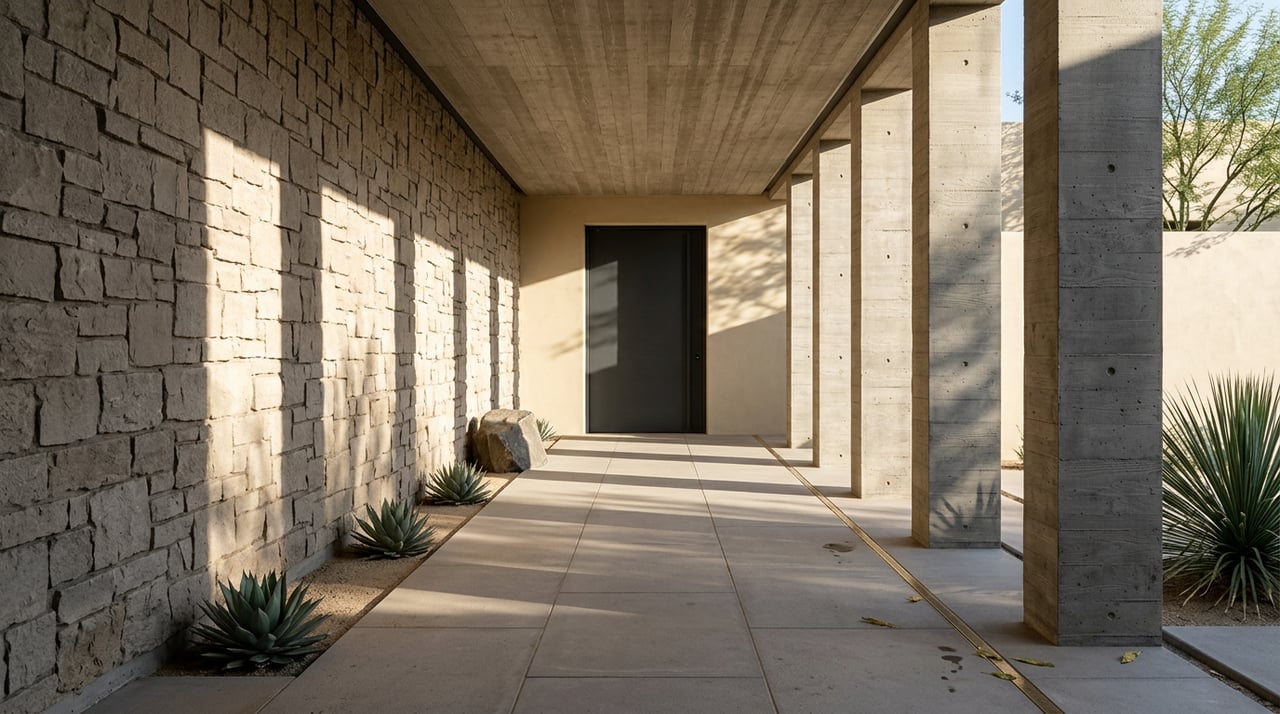
The Catalina Foothills market in June 2026 is holding its shape, but the shape has changed. Single-family median sale prices are running near $735,000, inventory has climbed to roughly 245 active single-family listings (the highest count since late 2023), days on market average 73, and sale-to-list is holding near 96.5 percent. The composite picture is a measured, balanced-to-buyer market rather than the seller-leverage cycle of 2024.
That framing is accurate, and also incomplete. It suggests the current risk to a Foothills seller is macro. It is not. The friction that decides whether your home clears in 55 days at 98 percent of list or sits 95 days and takes two price cuts is almost entirely address-level. The Foothills is one submarket on the map and four different transactions in practice, and the buyer pool this summer is disciplined enough to price each of those differences in.
The audit that has to happen before a sign goes in the yard
Every Foothills listing carries a small stack of address-specific facts that either support the price or quietly work against it. In a seller's market, buyers overlook them. In a market with 245 actives and 4.48 months of supply between $1.0M and $1.19M (and 8.18 months above $1.4M as of the March 2026 Southern Arizona data), they do not.
Four items belong on the audit before the CMA is even ordered.
Jurisdiction. The Tucson city limits line cuts through the Foothills on multiple arterials. The same street can have City of Tucson services on one side and unincorporated Pima County on the other, with different property tax structures, service levels, and zoning rules. A buyer's title company will confirm this at closing. A prepared seller confirms it before pricing.
School district assignment. The Foothills submarket is served by four separate districts — Catalina Foothills Unified (District No. 16), Amphitheater Unified, Tucson Unified, and Tanque Verde Unified — and the boundary lines do not follow subdivision boundaries. A home marketed as "CFUSD" that actually zones to Amphi will lose credibility during buyer due diligence, and the credibility loss travels straight into the offer. CFUSD's own boundary and open-enrollment policy is the primary source; the district notes that students outside the attendance boundary may apply through open enrollment based on capacity, which is a materially different value proposition than a guaranteed zoned seat.
Hillside status. Pima County's Hillside Development Overlay Zone applies to any land parcel with an average cross slope of 15 percent or greater, or to parcels with any slopes of 15 percent or greater, for parcels recorded after July 1, 1976. The county maps roughly 342,685 HDZ impact polygons across unincorporated Pima County, and the full text of Chapter 18.61 governs what a future buyer can and cannot do to the site. If your lot is under HDZ, any buyer with plans to expand a patio, add a casita, or rework a driveway inherits those constraints. Disclose them up front and price with them in view. The county's Hillside Development Checklist also notes that inadequate submittals draw a minimum $232 fee on top of base HDZ and grading fees, which is the kind of detail a buyer's builder will surface at inspection and use to renegotiate.
View corridor and easement reality. A partial mountain view from one bedroom is a different product than a broad panorama visible from the kitchen, great room, and rear terrace. Pima County identifies the Foothills as a special area with a policy overlay tied to its physical features and location, bounded generally by River Road, Sabino Creek, the Coronado National Forest, Oracle Road, and Northern Avenue. Buyers in this price band read that policy language and ask whether the view is protected, replicable on a neighboring lot, or vulnerable to a future teardown-rebuild across the wash.
None of these are marketing details. Each one is a term a buyer's counsel will ask about, and each one has a price attached to the answer.
What the June 2026 pricing behavior actually says
The temptation in a shifting market is to list at aspirational pricing and plan to adjust down. In the current Foothills, the math on that approach has moved the wrong direction.
Homes priced inside the comp range in the Foothills submarket are clearing in roughly 55 to 70 days. Homes priced five percent or more above comps are sitting past 80 days and getting cut. Above $1.5 million, Foothills homes that lose momentum are commonly closing 6 to 11 percent under original list after one or two adjustments. Above $3 million, days on market run 95 to 195 days as a baseline, not an outlier.
The mechanism is not mysterious. Roughly 35 percent of Foothills closings are cash, and cash buyers are the most disciplined comp-readers in the market. A financed buyer will sometimes stretch on a home they love. A cash buyer prices the address-level facts (jurisdiction, district, HDZ, view corridor) into the offer and moves on if the seller will not meet the number. When the cash tier sits out a listing, the financed tier reads the days-on-market count and follows.
The practical takeaway is that in this cycle, an aggressive first list price costs more than a disciplined one. The 6-to-12 percent give-back that follows two cuts is larger than the concession a well-priced home ends up making at the negotiation table.
The summer timing question, and why the received wisdom needs a caveat
The standard Foothills luxury calendar tells sellers to wait out July, August, and early September and relaunch in October. That calendar is broadly correct for one reason and wrong for another.
It is correct that the second-home buyer pool — the cash relocator from Chicago, Seattle, Los Angeles, the Midwest, or the Pacific Northwest that Redfin migration data identifies as the dominant inbound cohort — largely does not fly in during 100-plus degree afternoons. The National Weather Service Tucson climate normals show routine highs above 98°F in June, July, and August, and the Foothills submarket has real weeks of triple-digit heat working against a mid-day showing.
It is wrong, though, to treat summer as pure dead time. Inventory that launches in monsoon season and holds a disciplined price without cuts arrives in October with a clean listing history for the winter buyer wave. Inventory that launched in April at aspirational pricing arrives in October with 150 days on market, two visible reductions, and a stale label. The buyer who lands in Tucson in November and pulls a market snapshot can see the difference in ten seconds.
For a Foothills owner who must transact this year, the decision is not "list now or wait." It is "list at the number the comps support and let the days-on-market clock stay short," or "prepare through the summer and launch fresh in the fall with the house camera-ready and the address-level audit already done."
Where the transaction friction actually shows up
Beyond pricing, the Foothills submarket has three transaction quirks that catch out-of-market sellers and their listing agents.
The first is HOA architectural review at communities including La Paloma and Ventana Canyon. Recent exterior work, roof material choices, and even paint colors that were not run through the ARC can surface during a buyer's due diligence and reopen negotiation. If any work has been done in the last several years, the HOA file should be pulled and reconciled before the listing goes live.
The second is Joesler-era and legacy Catalina Foothills Estates properties. A restored Josias Joesler home with intact original detailing prices as a different product than a comparably sized 1990s stucco spec home two streets away, and buyers who care about that heritage know exactly which builder did which house. Under-marketing a Joesler is a common give-back. Over-marketing a non-Joesler as one is worse, and it is the kind of overreach that appraisers catch.
The third is off-market activity. A meaningful share of high-end transactions in 85718 and 85750 close without ever hitting the public MLS, which is why the "comps" a portal Zestimate uses are a partial dataset. Any Foothills CMA that does not include broker-network intelligence on off-market closes above $1M is missing part of the picture the buyer's agent already has.
FAQ
Does the current buyer-friendly market mean I should skip staging and photography? The opposite. In a market where buyers can afford to be selective and 245 active homes are competing for attention, the listings that get 55-day sale timelines are the ones where the photography honestly documents the view corridor, the light, and the outdoor rooms. Overly tight crops or heavy sky edits that imply a wider panorama than the home actually delivers create disappointment at the showing and shorten the offer.
How should I think about a view premium? Not as a flat percentage. Appraisal literature is consistent that a view premium reflects quality, rarity, and how protected or replicable the setting is. Sold comparables with similar terrain, orientation, privacy, and view experience are a better guide than the highest active listing on your street.
If my home is above $3 million, is a 95-to-195-day timeline avoidable? Sometimes, sometimes not. The very top of the Foothills market is thin by design. What is avoidable is layering an aggressive first list price on top of an already thin buyer pool. The homes that clear closer to the low end of that range are the ones where pricing, presentation, and address-level disclosure were all resolved before the listing went active.
If you are preparing to sell a home in the Catalina Foothills this summer or planning a fall launch, the address-level audit is the work that shapes every number that follows. The Bonn Team brings the transactional rigor and boutique marketing calibration this submarket rewards. Request a Confidential Market Consultation to review your property, your comp set, and your timing before the pricing decision is made.